



If you’re thinking about enhancing your smile, you’ve probably come across two popular cosmetic dentistry options: porcelain veneers and composite bonding. Both treatments can improve the appearance of chipped, worn, uneven, or discolored teeth, but they aren’t interchangeable. The right choice depends on your smile goals, the condition of your teeth, and what you’re hoping to achieve.
What Are Porcelain Veneers?
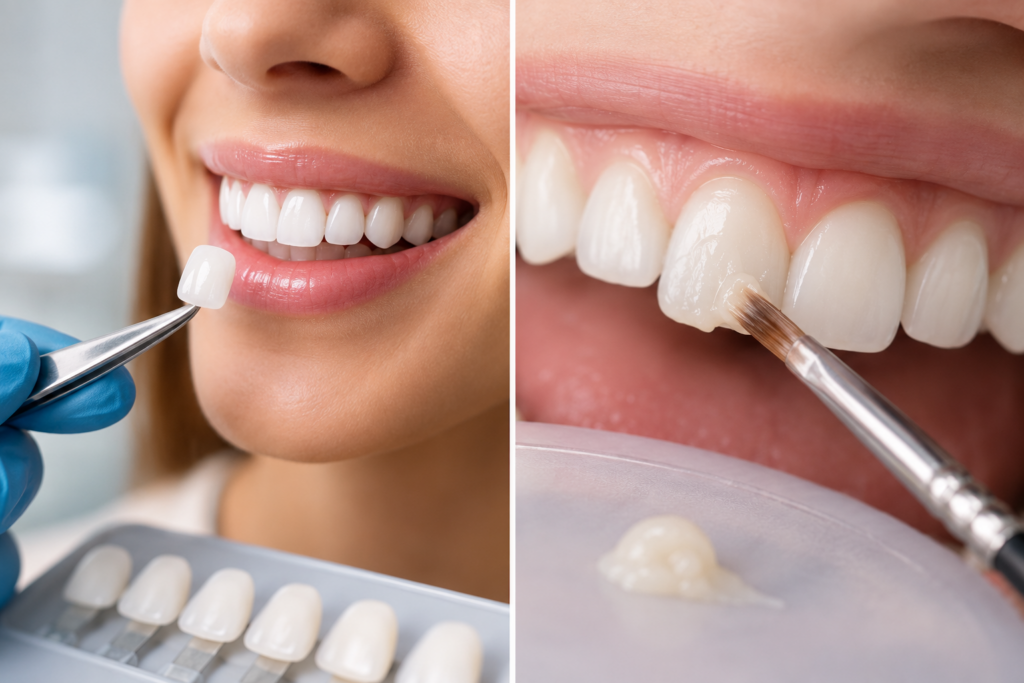
Porcelain veneers are thin, custom-made shells that are bonded to the front surfaces of visible teeth. They are designed to improve the appearance of teeth by changing their color, shape, size, or overall symmetry.
Because each veneer is custom crafted, treatment involves careful planning to create a result that complements your facial features and natural smile. At Bass & Watson Family Dental, this planning may include professional dental photography and digital diagnostic tools to help both you and your dentist evaluate your smile and discuss your goals before treatment begins.
Porcelain veneers may be recommended for concerns such as:
- Teeth with stains that may not respond to whitening
- Small gaps between teeth
- Minor differences in tooth size or shape
- Worn tooth edges
- Chipped front teeth
- Cosmetic asymmetry
Not every cosmetic concern requires veneers, and they are not the best solution for every patient. A comprehensive examination helps determine whether veneers are an appropriate option.
What Is Composite Bonding?
Composite bonding uses tooth-colored composite resin that is carefully applied, shaped, and polished directly on the tooth. The material blends with the surrounding enamel to improve the appearance of individual teeth while preserving as much natural tooth structure as possible.
Composite bonding is commonly used to:
- Repair small chips
- Close minor gaps
- Improve tooth shape
- Correct small areas of uneven wear
- Enhance overall smile balance
Because the material is sculpted directly on the tooth, treatment can often be completed without the fabrication process required for porcelain restorations. However, every treatment plan is individualized based on the tooth’s condition and your cosmetic goals.
What Cosmetic Concerns Can Both Treatments Address?
There is some overlap between veneers and composite bonding. Depending on your individual situation, either option may improve:
- Chipped teeth
- Minor spacing concerns
- Small shape irregularities
- Uneven edges
- Certain discoloration concerns
- Smile symmetry
The difference often lies in the amount of change desired and the long-term treatment plan. During your consultation, your dentist will evaluate your bite, existing restorations, enamel, gum health, and overall oral condition before recommending a cosmetic treatment.
How Do the Treatments Differ?
Although both treatments enhance smiles, they differ in several important ways.
Material
Porcelain veneers are fabricated from dental porcelain, while composite bonding uses a tooth-colored resin applied directly to the tooth.
Tooth Preparation
Depending on the clinical situation, porcelain veneers may require some enamel preparation before placement. Composite bonding is often a more conservative option and may require little or no enamel removal, although preparation varies from patient to patient.
Treatment Process
Composite bonding is performed by placing and shaping composite resin directly on the tooth.
Porcelain veneers require a customized planning process before the final restorations are placed. The exact number of appointments depends on each patient’s treatment plan.
Appearance
Both options are designed to create natural-looking improvements. The best choice depends on the extent of the cosmetic changes you’re hoping to achieve and the characteristics of your natural teeth.
Maintenance
Like natural teeth, both veneers and bonded teeth require:
- Daily brushing
- Daily flossing
- Regular professional dental cleanings
- Comprehensive dental examinations
Maintaining healthy gums and surrounding teeth is just as important as caring for the cosmetic restorations themselves.
Which Option Lasts Longer?
Patients frequently ask which treatment lasts longer, but there isn’t a single answer.
Longevity depends on many factors, including:
- Oral hygiene habits
- Bite forces
- Teeth grinding or clenching
- Diet
- Accidents or trauma
- Routine preventive care
Porcelain is generally resistant to staining and everyday wear, while composite resin may require periodic polishing, reshaping, or repair over time. However, every smile is different, and your dentist can discuss realistic expectations during your consultation rather than promising a specific lifespan.
Can Composite Bonding Be Repaired?
One advantage of composite bonding is that it can often be repaired or modified if small chips or wear occur. Whether repair is appropriate depends on the condition of the restoration and the tooth itself.
If a porcelain veneer becomes damaged, replacement may be recommended depending on the extent of the damage. Your dentist will evaluate the restoration and explain the available options.
Which Option Is Better for You?
Rather than asking which treatment is “better,” it’s more helpful to ask which treatment is better for your smile goals.
Porcelain veneers may be appropriate for patients seeking more comprehensive cosmetic changes involving multiple visible teeth, while composite bonding may be an excellent option for more localized improvements such as repairing a chipped tooth or closing a small gap.
Your recommendation will depend on factors including:
- Your oral health
- Existing restorations
- Enamel condition
- Cosmetic priorities
- Budget considerations
- Desired treatment timeline
- Long-term maintenance preferences
Every smile is unique, which is why personalized treatment planning is so important.
Why a Cosmetic Consultation Matters
Cosmetic dentistry is about more than choosing a procedure it’s about creating a treatment plan that supports both aesthetics and long-term oral health.
At Bass & Watson Family Dental, your consultation includes time to discuss your concerns, evaluate your teeth, and answer your questions without pressure. Using comprehensive examinations, digital imaging, and professional dental photography, our team can explain what they see and help you understand which options may best align with your goals.
Whether you’re interested in subtle improvements or a more complete smile makeover, you’ll receive recommendations based on your individual needs, not a one-size-fits-all approach.
Achieve a Smile That Reflects Your Goals
Choosing between porcelain veneers and composite bonding doesn’t have to feel overwhelming. Both treatments can provide beautiful cosmetic improvements when selected for the right reasons and planned carefully.
At Bass & Watson Family Dental, we’re committed to helping patients feel comfortable, informed, and confident throughout every step of the decision-making process. If you’re considering cosmetic dentistry and would like personalized guidance, schedule a consultation with our team. Together, we’ll discuss your smile goals, evaluate your oral health, and recommend the treatment approach that best fits your needs.
